Two Cages
As a mom to two boys and a daughter who may one day date boys, I try to keep my finger on the pulse of boyhood and masculinity. Recently, that led me to learn about Norah Vincent.
Her story was unknown to me, so the first thing I did was look her up. In the age of AI, it can be hard to determine what’s fact or fiction. Vincent described herself as a “lesbian journalist” and a vocal feminist. She decided to become “Ned Vincent” and undergo an immersive experience as a man. This wasn’t rooted in gender identity, but more of a method-acting endeavour, as much of her writing focused on gender stereotypes.
She expected the experience to resemble what to me sounded like the music video of Taylor Swift’s “The Man” and anticipated that readers would expect plenty of “man-bashing.” Instead, she chronicled an 18-month pressure-cooker experience marked by feelings of inadequacy, invisibility, and isolation in her book, Self-Made Man.
I haven’t read the full book, but I did read an excerpt that really resonated with me about her work:
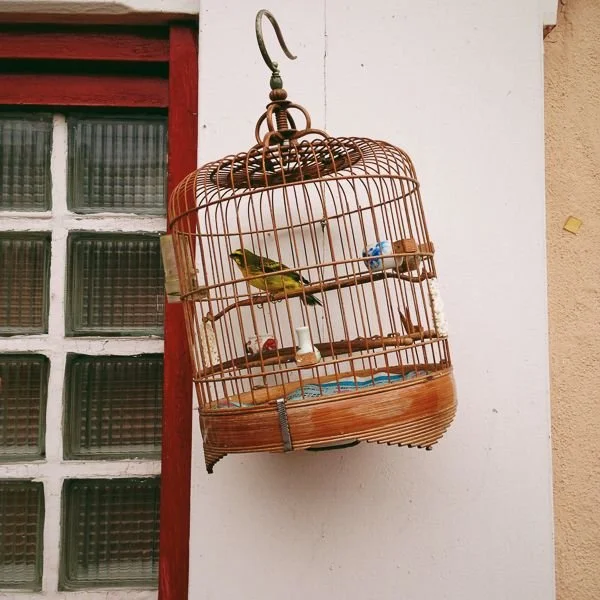
“And the answer was this: men and women are both trapped. In different cages, with different rules, but trapped nonetheless.
The patriarchy doesn’t free men. It conscripts them. Forces them to perform an impossible role while denying them the language to say it hurts.”
Acknowledging the challenges of the male experience does not erase the harms patriarchy causes women or absolve men of cultural failings. These are two distinct things. If men hurt women, perhaps healed men can help women too.
I had to repeatedly remind myself not to respond with whataboutisms about patriarchy, because Vincent’s work wasn’t propping it up. Rather, it explored how patriarchal expectations can also harm men. I used to think of men solely as beneficiaries of patriarchy, but maybe it’s more of a mixed bag.
It’s possible to check every privileged box and still struggle. That doesn’t mean we lose perspective on systemic injustice or ignore that others may have it worse. It doesn’t have to become an Oppression Olympics. Sometimes, people in positions of privilege experience a dismissal of their humanity because others assume they have it easy. But we are all human, and we all carry burdens. Support is more productive than dismissal.
There is also a culture of stoicism and silence surrounding men. I think that’s part of why the “red pill” movement gains traction with vulnerable boys — it fills a vacuum. “Toxic masculinity” does not mean masculinity itself is toxic; it refers to harmful behaviours and expectations associated with certain expressions of masculinity, exemplified by figures like Andrew Tate. I try to imagine being a man in romantic relationships. They are expected to not only woo their partner, but also be the “rock” of their families. My heart aches knowing feelings of inadequacy must gnaw and chip away at a man’s self-esteem and the self-actulization not often afforded to men that it takes to overcome that.
Vincent struggled deeply with depression and later described the experience of living a double life and maintaining a dual identity as catastrophic to her well-being. Tragically, she died by assisted suicide in 2022, despite seeking psychiatric treatment after the original 18-month experiment.
Do I think her life ended because she experienced what men face? No. But living as a man 24/7 for a year and a half does make me wonder what kind of support system she had going into it. Do I think the project was ethical? Probably not. There were not enough safeguards in place to protect her mental health. She also dated women who believed they were dating a man, which I believe was morally wrong, even if dating was considered a necessary part of the experiment.
At the same time, her story also highlights the importance of gender identity. Had Norah been a trans man, living as Ned may have brought peace rather than distress. Not only was she putting on a mask of masculinity, but she was suppressing her own femininity. Perhaps limiting the time to a few days to a few weeks could have mitigated some of the inner turmoil. After all, Mrs. Doubtfire could only be successful for a few weeks until the pantyhose slipped off that ruse.
There are flaws and ethical complications in her work, but a woman’s perspective on the hidden downsides of being a man is fascinating. At the very least, it can encourage more empathy — for everyone.
Why do I believe this is important? Our boys can find themselves feeling inadequate and isolated, especially during their formative years. Helping them meet those moments by equipping them with language and healthy strategies—where strength and vulnerability can exist together—can reduce the need to suppress emotions. That emotional suppression often creates a vacuum that gets filled by unhealthy outlets and can contribute to the continuation of harmful aspects of patriarchal expectations.
*Image Banner Photo Credit: Miles David Scott Photography